

The Color of Goodbye, by Pattie Palmer-Baker, reviewed by Tricia Knoll
Pattie Palmer-Baker knows how to tell a story. In The Color of Goodbye, the story begins with her parents dancing while her father is home on leave in 1943. Yes, he’s going to war. He’s going to see livid things there ––and during later work in Iraq–– that he cannot forget. He will live them and relive them and will look for escape in a bottle of Jim Beam. And his story will inevitably become the story of his wife and his two daughters.
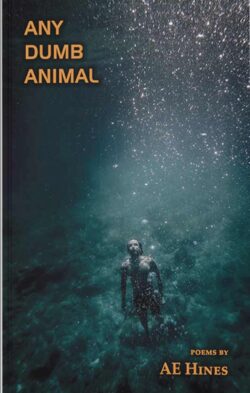
Any Dumb Animal, by AE Hines, reviewed by Jeanne Yu
AE Hines’s first collection, Any Dumb Animal, is a heartful lyrical memoir that centers around three pivotal “Phone Call” poems that open sections entitled “Revival,” “Regret,” and “Rebirth.” Hines revives a myriad of memories: growing up gay with a father who fails him, revisiting his own relationship that ends in divorce, and the wonders of his own adopted son. His unflinching exploration results in self-illuminations that leap off the page touching all that is human.
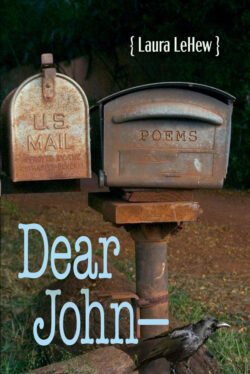
Dear John––, by Laura LeHew, reviewed by Anita Sullivan
Everybody has a love life of some sort. If you're a poet, you are in an excellent position to write about your own version in a way that might be helpful or interesting to others going through the joys and agonies love always provides; comparing notes, so to speak.
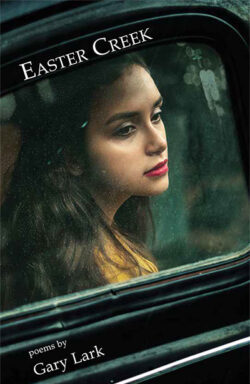
Easter Creek, by Gary Lark, reviewed by Tony Greiner
Gary Lark has long been a favorite poet of mine, starting over 20 years ago when I heard him at a reading. Lark read one of his poems “Fishing” and another by Clemens Starck. I thought it generous of him to spend some of his time celebrating another poet’s work. Lark’s poetry also has this kind and accepting spirit, a heart-softening quality that embraces the humanity of even those who err.
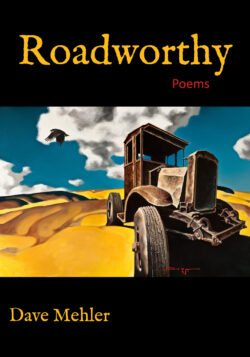
Roadworthy, by Dave Mehler, reviewed by Zeke Sanchez
Dave Mehler is a good writer, a good poet. He writes about his life as a long-haul truck driver. He writes about people struggling with a real life of sequential cigarette breaks between stretches with a hand truck or a forklift, lifting with their arms and backs. Nothing grand. No Great Captains of Industry, no millionaire heart surgeons, no war heroes.
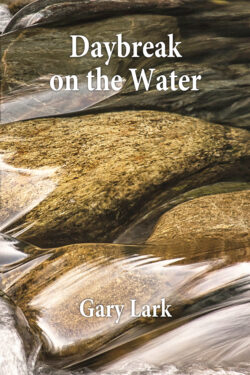
Daybreak on the Water, by Gary Lark, reviewed by Vince Wixon
The epigraph, “I am haunted by waters,” from Norman Maclean’s masterpiece novella, A River Runs through It, prepares readers of Gary Lark’s Daybreak on the Water for a book about fishing and family. As in Maclean’s book, the water is fresh and, in Daybreak’s case, so is the Umpqua River and its tributaries in Southern Oregon where Lark grew up. Water in various locations––rivers, estuaries, the Pacific ocean—runs through all of Lark’s books of poetry. In fact, four of the seven include water in the title: Tasting the River in the Salmon’s Flesh, River of Solace, Easter Creek, and Daybreak on the Water.
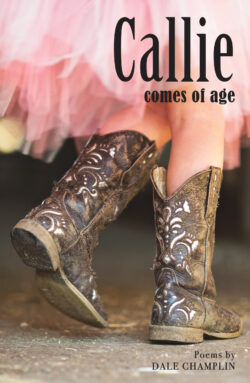
Callie Comes of Age, by Dale Champlin, reviewed by Jackie McManus
Callie Comes of Age is a haunting coming-of-age story that could fool you with its lyrical, almost casual language. Prepare your heart. It is full of a staggering anguish. When significant people die, it is a shattering experience for Callie, the young protagonist of Dale Champlin’s collection, who had already lost the three great loves of her life/and she’s just turned fifteen (“Callie Writes the Novel of Her Life”).
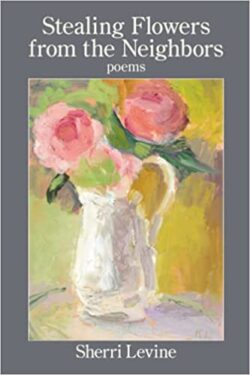
Stealing Flowers from the Neighbors, by Sherri Levine, reviewed by Paul Telles
In Stealing Flowers from the Neighbors, Portland poet Sherri Levine proves that she understands the Rumi epigram that introduces her book: You have to keep breaking your heart until it opens. The result is a series of 53 poems that testify about difficult themes that include mental illness and the death of a parent.

OPA reviews Grim Honey, by Jessica Barksdale, reviewed by Alicia Hoffman
Like the horrific tragedy of 9/11, everyone will remember where they were when Covid19 shut down the globe. In early March 2020, days before nation-wide school closures, I was standing in a room full of maskless high schoolers, reviewing for the upcoming AP Language exams. We were studying the rhetorical concept of exigence, the idea that writers often come up against a situation that demands action or remedy. It is this impulse, this urgency, that often calls us to act, that prompts utterance, that begs us to better understand our place in the world’s vast and complicated chess game.