
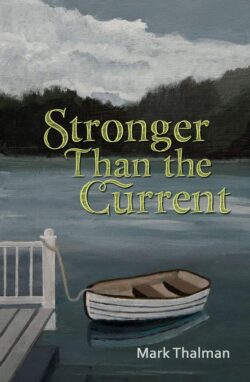
Stronger Than the Current, by Mark Thalman, reviewed by M. Ann Reed
The title of Mark Thalman’s chapbook, Stronger Than the Current, emerges from the dominant character trait of Helen McCready, a native Oregonian. When the rising Siuslaw River drowns McCready’s prize tulips, she keeps her rowboat tied to the back porch from which she fishes for salmon. Her patience is stronger than the current (“Mapleton”). Not a patience of necessity for survival, not a patience of placid waiting for the fish to bite, hers is rather a steadfast mindful trust in and love of the remaining beauty, which surpasses necessity.
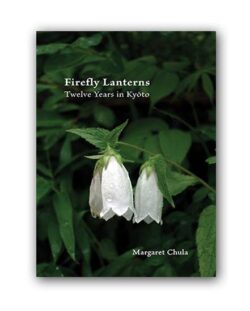
Firefly Lanterns: Twelve Years in Kyōto, by Margaret Chula, reviewed by Ce Rosenow
I have known Maggie for almost thirty years, having met shortly after her return from living in Japan. I found several of the stories in Firefly Lanterns to be familiar tales she shared while we visited beneath the copper beech in her back meadow in Portland or shared a meal. Other stories were new to me, and even the ones I had heard before took on new life because of her decision to write them as haibun. This Japanese form began as a type of travel writing, making it particularly appropriate for sharing Chula’s memories of her time abroad. It combines prose paragraphs with haiku, allowing the poet to craft detailed vignettes punctuated with crystalized images in the haiku. Chula is a longtime practitioner of haibun and even invented the form of linked haibun with Rich Youmans in their book Shadow Lines. In Firefly Lanterns, she takes varied approaches, sometimes concluding the haibun with haiku and other times interspersing haiku throughout a longer prose narrative.
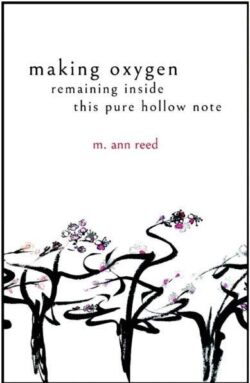
making oxygen, remaining inside this pure hollow note, by M. Ann Reed, reviewed by Sakina B. Fakhri
The poems in M. Ann Reed’s making oxygen, remaining inside this pure hollow note invite the reader into the hollow growing point we share with plants – the silent note through which, as the author says in the Preface, we breathe soul-life into words, words into musical patterns, musical patterns into images, all literary features into meaning. And so this book unravels, teaching the reader how to read it as it proceeds with a sense of movement without propulsion – a sense of moving-with instead of moving-towards. The words do not merely transform, but transform with the reader.
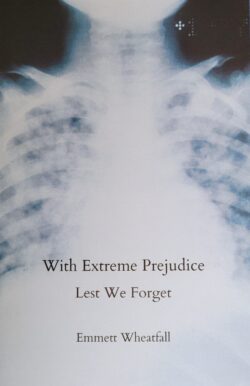
With Extreme Prejudice, Lest We Forget, by Emmett Wheatfall, reviewed by Carolyn Martin
As a poet astutely aware of the challenges facing 21st century America, Emmett Wheatfall has never shied away from the in-your-face-truths all of us need to hear. With Extreme Prejudice, Lest We Forget is his latest foray into truth-telling. This collection bears witness to the history of the COVID-19 pandemic which Wheatfall elegantly describes as The greatest hitchhiker on earth…/making its rounds (“Every Nation Under The Sun”).
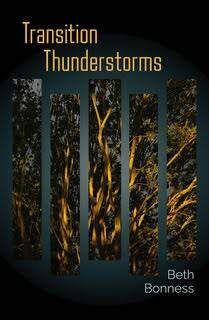
Transition Thunderstorms, by Beth Bonness, reviewed by Roxanne Colyer
In Transition Thunderstorms, Beth Bonness offers breathtaking insights into life events we find hard to talk about with the people we love most. This book is a tender and honest lifeline to reconnection.
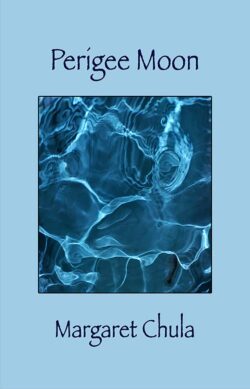
Perigee Moon, by Margaret Chula, reviewed by Jeanne Yu
In her collection, Perígee Moon, Margaret Chula invites us closer into the luminous light of tanka, a poetic form rooted in the Japanese Heian era (790 –1180 A.D.) Tanka, meaning literally “short song,” has captured the imagination of lovers, warriors, and emperors over the centuries. Today tanka remains popular in weekly Japanese newspaper columns and as a mainstay in imperial family customs.

More Alice—Further Fragments, by Matthew Michael Hanner, reviewed by Gayle Kaune
Fans of Michael Hanner’s earlier work, Alice—What I Heard, will be pleased with this charming and inventive sequel, More Alice—Further Fragments. The main character, Alice, is a chimera whose mini adventures coalesce to form a whirligig of her life.
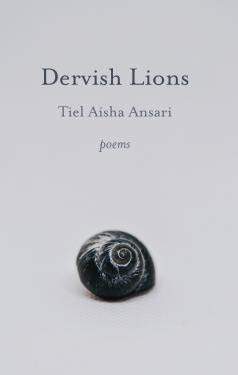
Dervish Lions, by Tiel Aisha Ansari, reviewed by Betsy Fogelman Tighe
Dervish Lions is divided into three sections: “Kingdom of Wind,” “Countries of Origin,” and “Province of Saints.” The first two sections land themselves more firmly in the environment: the first section mostly in Oregon and the second section in ancestral lands which include the more exotic locales in which Ansari spent much of her youth. These sections employ many of Ansari’s regular devices, including simple narrative, mostly declarative sentences, and a flatter diction; for example, For some time I’ve wanted to climb the Marquam Trail/to the top of Council Crest ("Death on the Marquam Trail"). The third section contains most of the more spiritually yearning poems and lifts the book to another level.
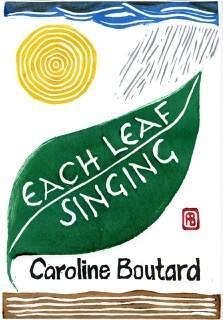
Each Leaf Singing, by Caroline Boutard, reviewed by Melody Wilson
Caroline Boutard’s Each Leaf Singing is a feast for the senses. The cover feels good in your hand, the paper has high rag content, the print is elegant and light. It’s a collection to envy, from the woodcuts on the cover—contributed by the poet’s husband––to her calls back to him from within the poems. This little book is bursting with beauty, love, and first-rate poetry, all without excess. Spare, lean, filled with heartbreak and delight, Boutard’s poems introduce a world we come to know and love.